Private Label Tire Shine and Wheel Cleaner Manufacturing
Add tire shine and wheel cleaner to your brand, starting from five existing formulas.
Products in this range
What is private label tire shine?
Private label tire shine is a tire dressing produced by a manufacturer and sold under your brand. A tire dressing darkens the sidewall, sets its gloss level and conditions the rubber. Wheel cleaner is its natural partner on the shelf, because customers clean the wheel and dress the tire in the same session.
Tire and wheel products are judged quickly and visibly. A dressing that flings onto the paint, or a wheel cleaner that marks a rim, produces complaints with photographs attached. That makes a precise brief and a careful sample test especially important in this category.
SMOOTH DRIVER CO., LTD. develops, formulates and manufactures automotive care products at its own factory in Changhua County, Taiwan. The company was founded in 2000 and its registered office is in Changhua City, Taiwan.
Tire and wheel products in the catalogue
See all five on the Tire & Wheel category page.
Tire dressings
- Tire Shine: a tire-care product intended for a glossy finish. A spray-and-wipe dressing, 500 ml.
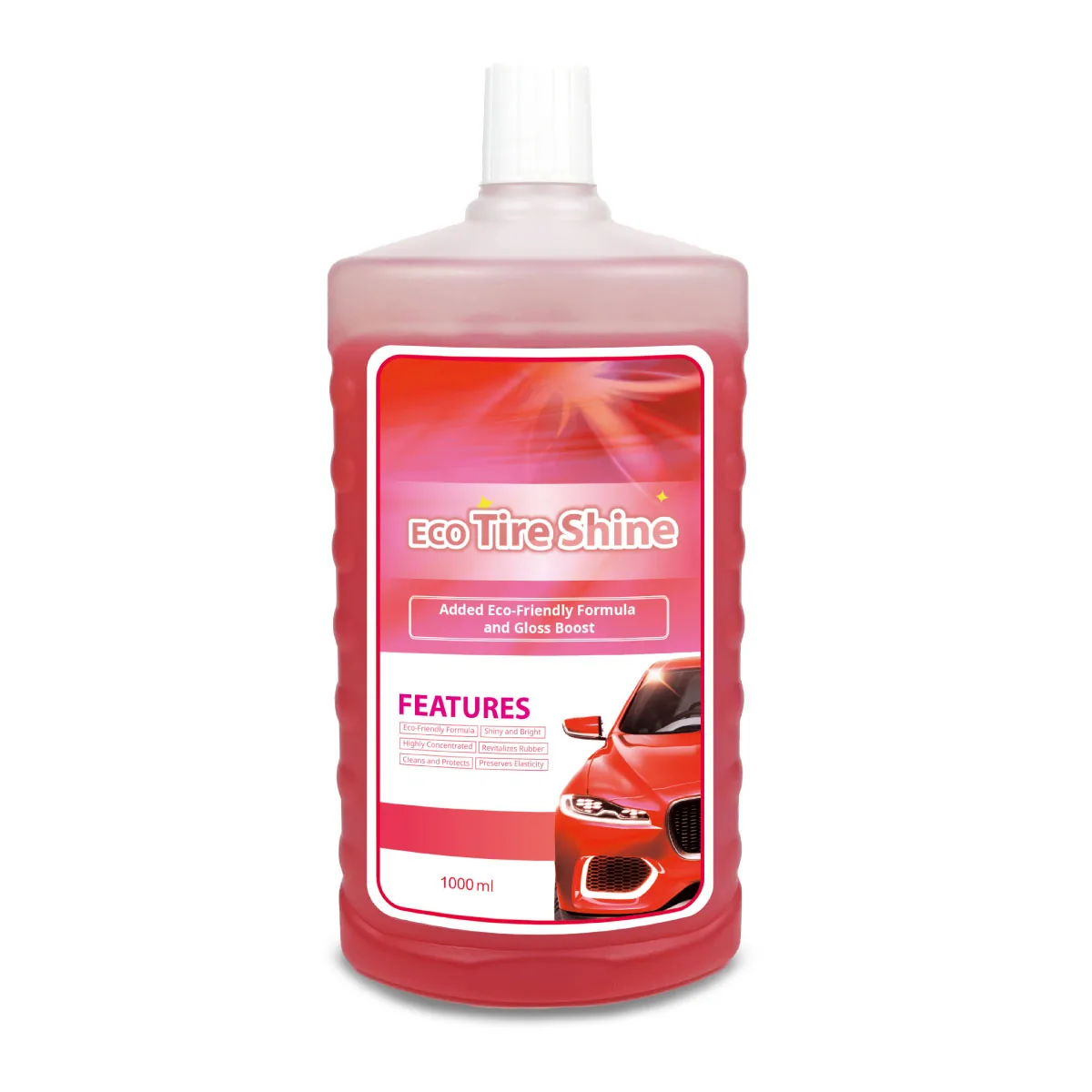
- Eco Tire Shine: a tire-care gloss product. A concentrated dressing applied with a sponge, 1000 ml.
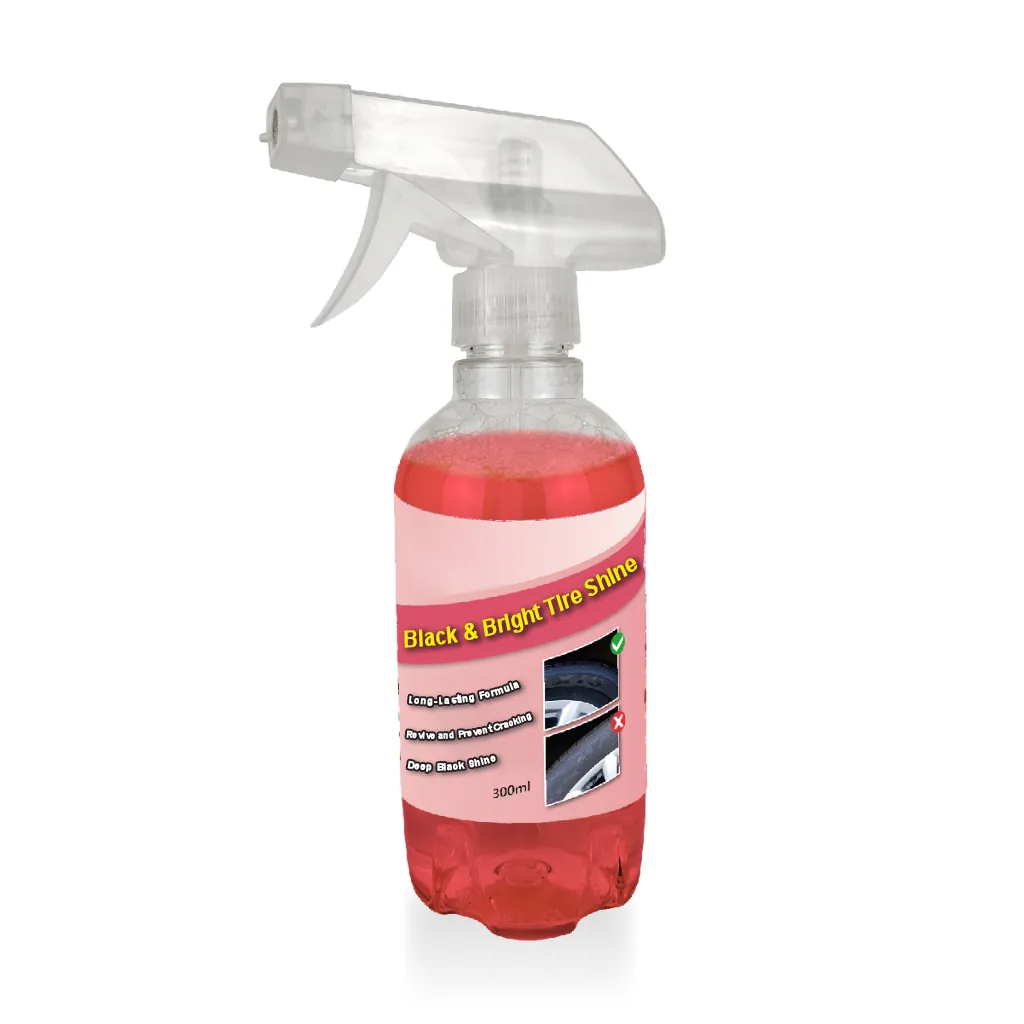
- YOUMAKE Tire Cleaner Polish: a tire-care lotion in the YOUMAKE catalog range. Sprayed on and spread with a sponge, 300 ml.
Wheel cleaners
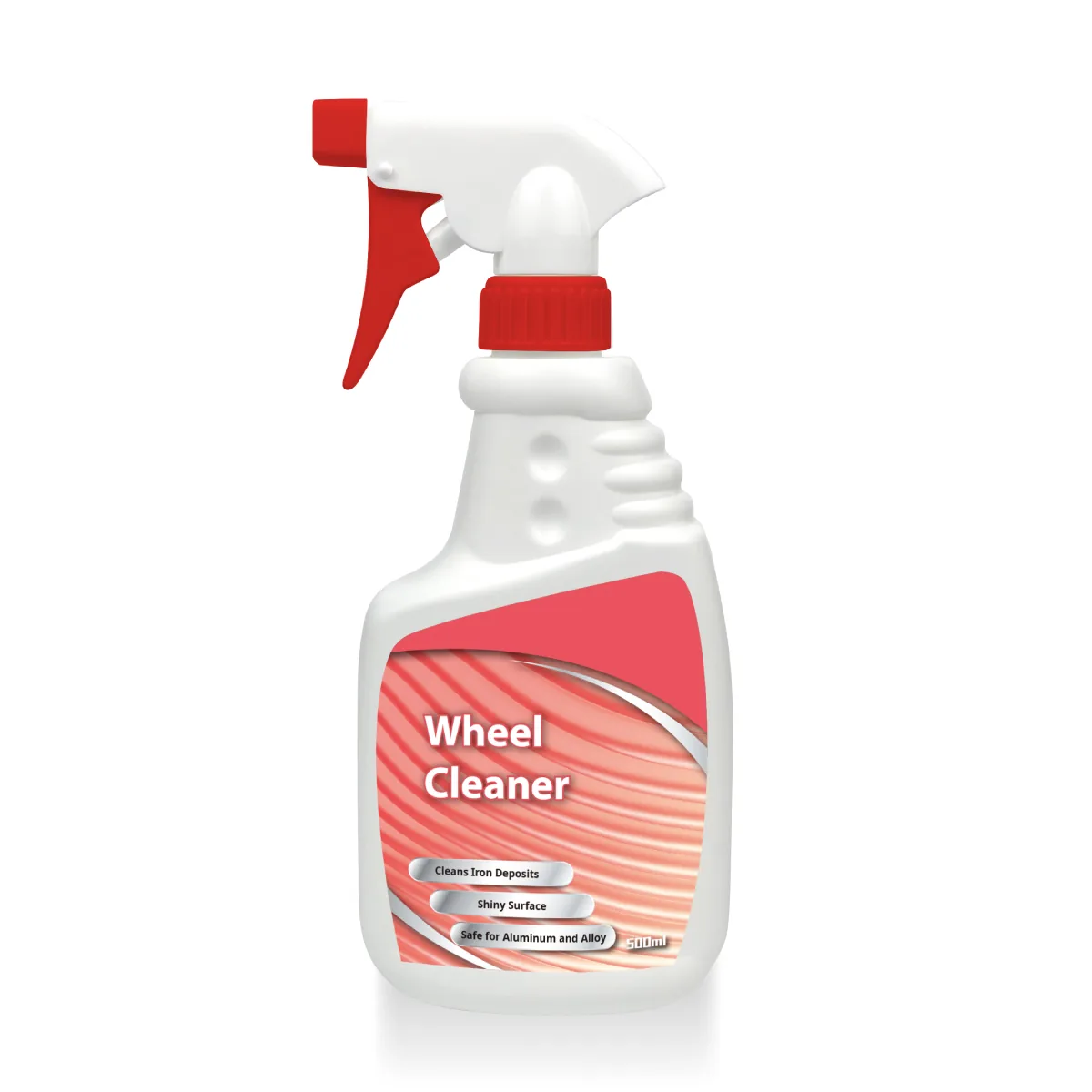
- Wheel Cleaner Spray: a spray cleaner for vehicle wheel rims that removes road dirt, iron particles and brake dust. 500 ml.
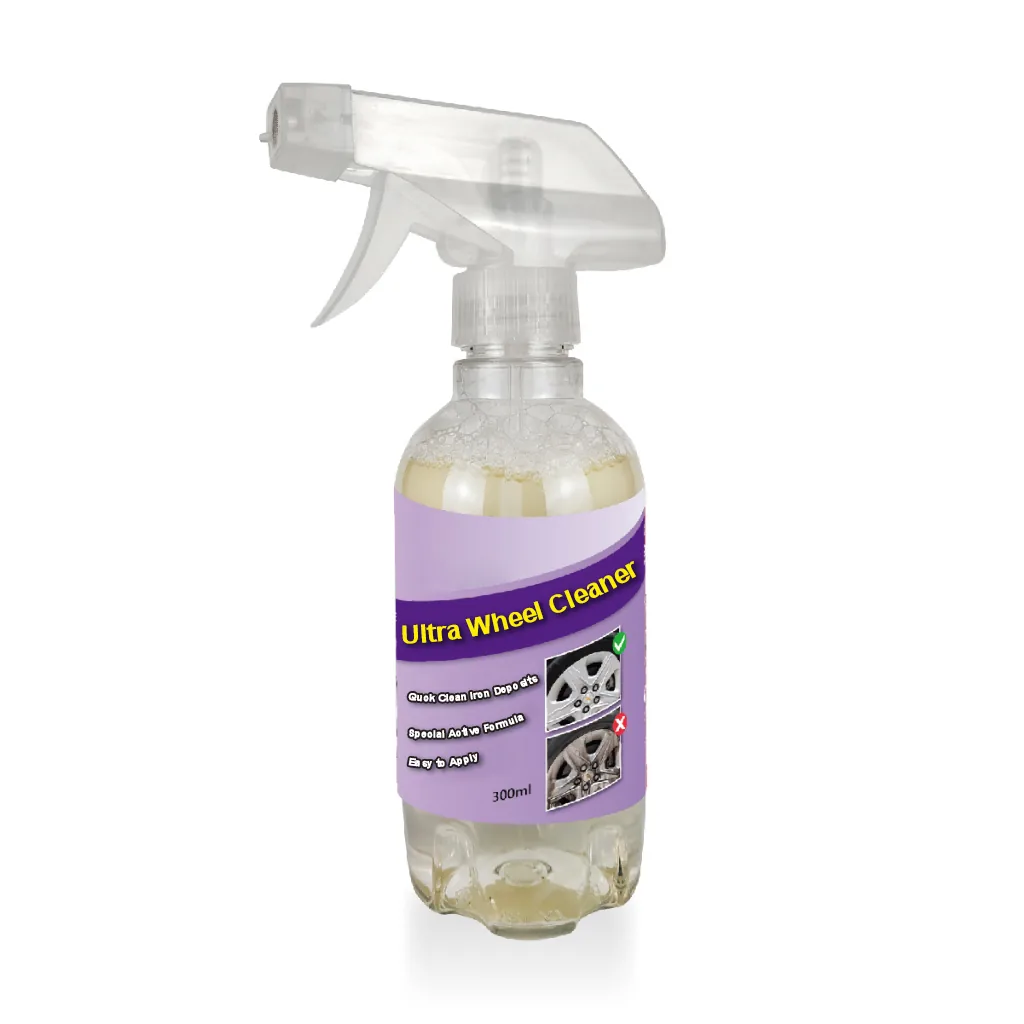
- YOUMAKE Wheel Spray Cleaner: a spray cleaner for steel and aluminum wheel rims. 300 ml.
Supply options
| Option | What you get |
|---|---|
| Our own brands | The catalogue product in its original packaging |
| Private label | Our existing formula and bottle with your label; on larger projects, fragrance, colour or concentration can be adjusted |
| Custom formula or special bottle | A formula developed to your brief or a non-standard container; a custom formula is produced only after sample approval |
If you are unsure which applies, our OEM/ODM page describes when each arrangement makes sense and what to confirm about rights and responsibilities.
Water-based or solvent-based tire dressing: which should you specify?
A water-based tire dressing carries its active ingredients, usually silicone emulsions or polymers, in water. A solvent-based dressing carries them in a hydrocarbon solvent. The carrier changes the finish, the handling and the logistics.
Water-based dressings
- Typically give a satin to medium gloss that can be built up with a second coat
- Dry to a less greasy feel and are generally less prone to sling
- Are usually not flammable, which simplifies shipping and storage
- Wash off sooner in heavy rain
Solvent-based dressings
- Typically give a wetter, higher gloss and resist water longer
- Are more likely to sling if over-applied or driven on before drying
- Are often flammable, which brings dangerous-goods shipping and stricter labelling
- Face solvent-content limits in some markets
Our product pages do not state which carrier each dressing uses. If the answer matters for your positioning or your market's rules, ask the question in your enquiry and name the market.
Gloss level is a brand decision
Decide whether your customer wants satin, a natural new-tire look, or a wet shine. Preferences differ by channel and by market, so check what your customers buy now. If you can only launch one finish, pick that one.
Spray, lotion or concentrate
A trigger spray is fast but oversprays onto wheels and paint. A lotion or gel applied with a sponge gives control and less waste. A concentrate suits car-wash and detailing businesses that dilute and apply in volume. The three dressings in our catalogue cover these three formats.
Sling
Sling is dressing thrown from the tire onto the bodywork when the car moves. It depends on the formula, the amount applied and the drying time. Include it as a named test item and write the application amount and waiting time into your label directions.
Wheel cleaner chemistry: acid, alkaline or iron-reactive?
A wheel cleaner removes brake dust, which is largely iron particles baked onto the rim, together with road grime. There are three broad approaches.
- Acidic cleaners work fast on heavy deposits and are used by trade operators. They can etch bare aluminium, chrome and some clear coats if misused.
- Alkaline cleaners are strong on grease and road film, less so on embedded iron, and can dull sensitive finishes if left to dry.
- Iron-reactive cleaners dissolve iron particles chemically at a mild pH. They are positioned as the safer choice for coated alloy wheels and are often recognised by a colour change and a strong sulphur smell.
Our YOUMAKE Wheel Spray Cleaner is described on its product page as an active cationic formula that dissolves iron particles without harming the wheel finish, suitable for steel and alloy wheels. For any wheel cleaner you plan to brand, list the finishes your customers have: painted, clear-coated, polished bare aluminium, anodised or chrome. Ask us to confirm suitability for each, and test them yourself on the sample.
Packaging points for tire and wheel products
- Sprayer compatibility. Wheel cleaners and solvent dressings can attack some trigger sprayer parts. Ask which sprayer is fitted and whether it has been evaluated with the formula.
- Applicators. Sponge-applied dressings sell better with the applicator in the pack. Decide this before artwork.
- Directions. Contact time matters. Our wheel cleaners are left for 3 minutes and then rinsed. Wording such as "do not allow to dry" and "use on cool wheels" protects you from misuse complaints.
- Surfaces to avoid. Dressings should be kept off tire tread, motorcycle tires, pedals and brake discs. Check the warnings your market expects and send us the approved text.
- Your language. We print labels in your language from text you provide or approve, and can help with label design, carton marks and barcodes.
What should you check on a sample?
Tire dressing
- Gloss level against your reference, after one coat and after two
- Drying time and surface feel
- Sling after a short drive, on a light-coloured car
- Appearance after rain and after one wash
- Any browning or uneven patches after a week
Wheel cleaner
- Brake dust removal with and without a brush
- Each wheel finish you intend to name on the label
- Behaviour if left longer than directed
- Smell, since iron-reactive cleaners can be unpleasant in enclosed bays
- Effect on tires, brake calipers and wheel nuts
The tire dressing section of our formulation briefing guide explains how to keep application amount and drive-off time consistent between testers.
How to work with us
- Enquire. Send the details in the checklist below through our quote form. You will hear back within one working day.
- Sample. Try the existing products first; sample terms are in the FAQ.
- Quote. Prices are quoted in USD, normally FOB Taiwan port, or CIF to your port on request. The quotation confirms final terms.
- Approve. Label and packaging for private label; the sample for a custom formula.
- Produce and ship. Payment is by T/T, with a 30% deposit at order and the 70% balance before shipment. Open-account terms are not offered for first orders.
Order terms at a glance
Our own brands in original packaging Minimum 1 carton per product and 50 cartons per order; different products can be mixed in one order. Shipped 7–15 working days after the deposit is received.
Private label (our existing formula and bottle with your label) From 500 units per product. 25–35 working days after label and packaging approval.
Custom formula or special bottle From 500 units per product. Custom formula: 35–45 working days after sample approval.
Get a quotation for tire and wheel care
Send your product list and quantities to receive a quotation, or ask a question first if you are still shaping the range.
What to include in your quote request
Which dressings and wheel cleaners you want, and the quantity of each
Our brand, your label, or a custom formula
Destination country and port
Target delivery date
Target finish for the dressing: satin, natural or high gloss
Wheel finishes the cleaner must suit
Label language and any solvent or hazard rules that apply in your market
Frequently asked questions
Are your tire dressings water-based or solvent-based?
Our published product pages do not state the carrier used in each dressing, so we will not state it here. If you need a water-based product for positioning or because of solvent rules in your market, make that a fixed requirement in your enquiry and name the market. We will tell you which existing formula fits, or whether the project needs a custom formula.
Will the tire shine sling onto the paintwork?
Sling depends on the formula, how much is applied and how long it dries before the car moves, so no dressing can be judged without a test. Apply the sample as your customers would, wait the time you plan to print on the label, drive, and inspect a light-coloured panel behind the wheel. Record the amount and waiting time so results can be compared.
Is the wheel cleaner safe on all wheel finishes?
The YOUMAKE Wheel Spray Cleaner is described as suitable for steel and alloy wheels, and both wheel cleaner pages advise testing on an inconspicuous area first. We do not publish a list of every finish. Tell us the finishes you want to name on your label, such as polished bare aluminium, anodised or chrome, and test each one on the sample.
Can I get samples of the tire and wheel products?
Yes. Samples of existing products are free of charge, 1–2 bottles per product; the buyer pays the international courier cost and may use their own courier account. Flammable products cannot be sent by ordinary courier, so ask us whether that applies to the items you choose. Custom-formula samples are charged, and the fee is credited against the first order.
Can you adjust the gloss level of a tire dressing?
For private-label orders we can adjust fragrance, colour and concentration on larger projects. A different gloss level may be achievable through concentration, or it may need a custom formula, which is produced only after you approve the sample. Send a reference product or photograph and say which matters more to you: the finish, the drying time or resistance to rain.
What is the difference between a tire cleaner and a tire dressing?
A tire cleaner removes old dressing, road grime and the brown film that forms on sidewalls. A tire dressing is applied afterwards to darken the rubber, set the gloss and condition the surface. Some products combine light cleaning with dressing. Our catalogue describes Eco Tire Shine as a dressing that cleans and conditions rubber, and YOUMAKE Tire Cleaner Polish as a dressing lotion that removes white haze after washing.
Can we become your exclusive distributor for tire and wheel products?
Exclusive distribution can be discussed for a defined market, based on an annual volume commitment. Tell us the market, the channels you sell through and the volume you expect in the first year. Exclusivity for a private-label formula is a separate question from distribution of our own brands, so state which one you are asking about.
Ready to start your private label line?
Tell us the products, quantities and destination, and we will reply within one working day.